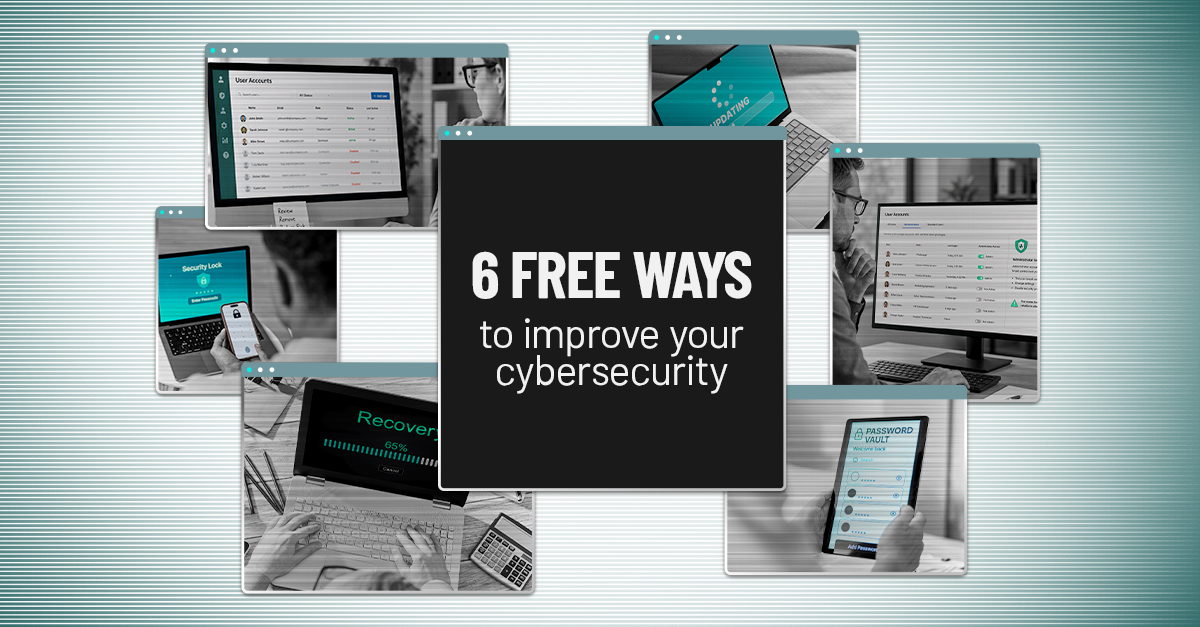
Cybersecurity is often treated as a technology problem, but technology is only part of the equation. We see this with businesses across South Florida, including Broward County, Miami-Dade, and Palm Beach; biggest risks come from basic security practices that have been missed, delayed or applied inconsistently.
A simple security gap works just as well as a complicated one.
Here are six easy improvements you can make this week to reduce cyber risk.
1. Turn on multifactor authentication
If you haven’t enabled multi-factor authentication (MFA), it should be your top priority. MFA requires users to verify their identity in more than one way before gaining access to an account or resource. In practical terms, this means providing something besides a password or PIN. Typically, that’s a code sent to them via SMS or an authentication app, a security key, or biometric identification like a fingerprint or face scan.
With MFA in place, if an attacker steals or guesses a password, it usually isn’t enough to access an account. The attacker would also need to get past the second verification step.
Enable MFA first for:
- Microsoft 365 or Google Workspace
- Banking and payroll applications
- Cloud storage
- VPN access
- Business-critical applications
Most platforms offer MFA at no extra cost. Turning it on closes one of the easiest gaps attackers can exploit.
2. Delete accounts nobody needs anymore
Accounts belonging to former employees, temporary contractors and vendors you no longer work with can remain active long after they’re needed. Because these accounts are often overlooked, they can offer attackers an easier way into your systems. For a 10 to 100 employee business, this can happen surprisingly quickly.
Review your user accounts and ask:
- Does this person still work with us?
- Does this account still serve a business purpose?
- Does the account need the level of it has?
If the answer to any of these questions is no, adjust permissions or remove the account.
3. Stop giving everyone administrator access
Administrator accounts have broad control over your systems. They can install software, change settings and disable security protections, making them especially valuable to attackers.
Take stock of access across your business and ask:
- Does this person need to be an admin to do their job?
- Are there account levels better suited for their function within the tool?
- Is administrative access appropriate for the accounts that currently have it?
Remove administrator privileges where they’re not required. Giving people only the access they need helps limit the impact of a compromised account.
4. Turn on automatic updates
Attackers often target software with known vulnerabilities. Updates help close those gaps.
Check that automatic updates are enabled for:
- Windows and macOS
- Phones and tablets
- Web browsers
- Microsoft Office
- Antivirus software
- Key business applications
Keeping systems up to date closes known gaps before attackers can exploit them.
5. Start using a password manager
Strong passwords matter, but expecting employees to remember a complex, unique password for every account isn’t realistic.
A password manager helps users:
- Create strong passwords
- Store them securely
- Avoid password reuse
- Share credentials safely when needed
The fewer passwords employees have to remember, the less likely they are to reuse weak ones.
6. Confirm your backups work
Having backups isn’t enough. You need to know you can restore your data when something goes wrong.
For businesses across South Florida, backup planning should also consider what happens when the disruption affects more than a single computer. Severe weather, power interruptions, flooding, or loss of access to a location can change how and where your team needs to recover.
Check your backups and ask:
- When did our last successful backup run?
- Has anyone tested a restore recently?
- How long would recovery take?
A backup protects your business only if it works when you need it.
Do a 30 minute cybersecurity cleanup
Here is something practical you can do this week.
Get whoever handles technology involved and choose one important system. Microsoft 365, Google Workspace, your accounting platform, or your customer management system; whatever matters most to the business.
Then check three things:
- Who has access?
- Who has administrator privileges?
- Who has MFA enabled?
You do not need to overhaul your entire cybersecurity strategy in an afternoon.
- Start somewhere important.
- Fix what you find.
- Then move to the next system.
- Small improvements add up quickly when they close real security gaps.
Stronger cybersecurity does not always require a bigger budget
As an IT support and cybersecurity provider serving South Florida, we help businesses across Broward, Miami-Dade, and Palm Beach understand where their real security gaps are before recommending more technology.
Sometimes a business needs additional protection.
Sometimes it already owns the right technology but it has not been configured properly.
And sometimes the biggest improvement comes from fixing a basic process everyone assumed was already being handled.
That is why cybersecurity should start with an assessment, not a shopping cart.
If you are not sure which of these six areas your business has covered today, let’s take a look.
Call us at 954-237-7797 or schedule a quick discovery call here:
We can help identify where you are exposed, what you can improve with the tools you already have, and where an additional investment actually makes sense.
And if you know another South Florida business owner who thinks improving cybersecurity automatically means buying another expensive product, send this article their way.
Sometimes better security starts with turning on what you already paid for.